Learning program
Avi-ad offers different courses through out the year.
The courses take place in our training centers: Tel Aviv – Israel and Colombo – Sri Lanka,
during your employment period or before your arrival to Israel.
The classes schedule is flexible and adjusted to the unique characteristics of the employee’s framework.
BTEC
BTECs reflect the skills and knowledge needed to do a job effectively. They are made up of units which describe the skills and knowledge needed to do a job effectively. Vocational and academic qualifications are different in terms of measuring knowledge and skills. The BTEC Nationals is a vocational qualifications, designed to give students the skills they need either to move to higher education or go straight into employment as a 'skilled worker'.The Health and Social care Studies is a vocational courses in various levels all in common purpose of helping people to become occupationally ready to take up employment in the health and social care sector.
The subjects combines elements of sociology, biology, nutrition, law, and ethics.
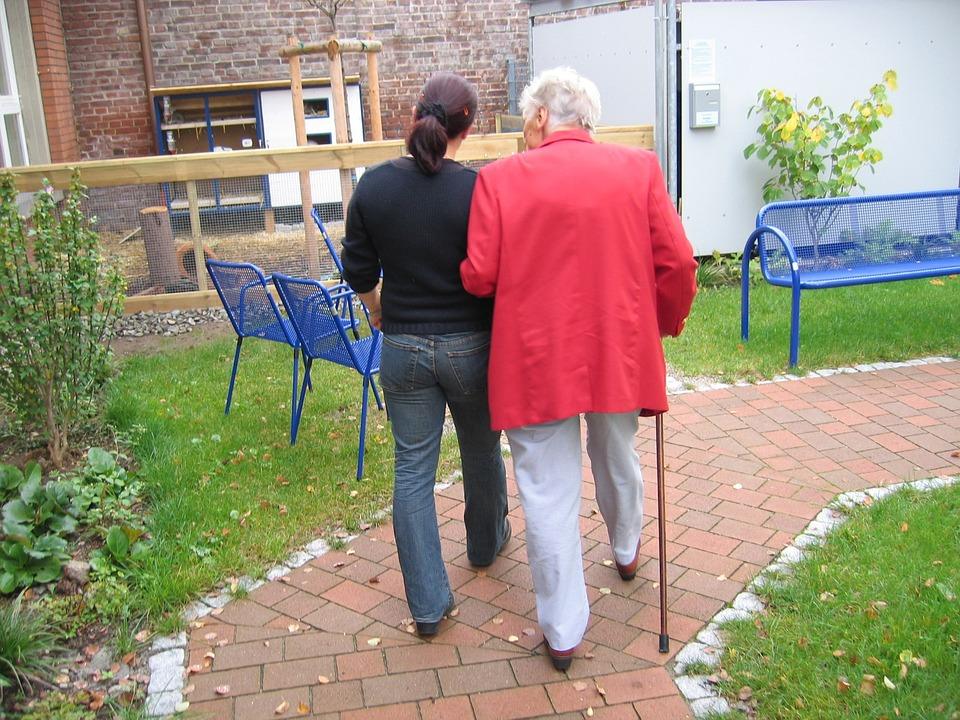
The Pearson BTEC level 3 National Diploma in Health and Social Care (QCF)
The Pearson BTEC level 3 National Diploma in Health and Social Care (QCF) is part of a large suite of health and social care qualifications, all in common purpose of helping people to become occupationally ready to take up employment in the health and social care sector. By studying this course the student will develop knowledge, understanding and skills required by the sector and apply them in real work context. The diploma was designed in close collaboration with the industry. This means it is highly respected route for those who wish to move into employment in the sector. Also, the BTEC level 3 National Diploma in Health and Social Care (QCF) provides a well-established route into variety of specialist higher education courses in this sector and beyond. In addition, a number of universities have individually confirmed that this Pearson BTEC level 3 National Diploma in Health and Social Care (QCF) fulfils their requirements when achieved alongside other qualifications.
In order to successfully finish the Pearson BTEC level 3 National Diploma in Health and Social Care (QCF) student must fulfil 120 credits. The 8 mandatory units provide the student with 80 credits. The rest of the units will complete the 120 credits needed, depending on the specialization field
The BTEC Higher National in Health and Social Care
BTEC Higher Nationals provide a program of specialist vocational learning at level 4 and 5, reflecting the needs of professional organizations. They are underpinned by the national occupational standards (NOS) for health and social care industry.
They place a strong emphasis on developing practical skills alongside specialist knowledge and understanding, and are recognized internationally by employers as providing students with the key concepts and practical skills required for progression to, or within employment.
The BTEC Higher Nationals offer a level of flexibility allows the student to complete their studies alongside a full time employment. On completion of the BTEC Higher National Diploma the student may top up to a full degree or a Level 6 professional diploma.
A BTEC Higher National Diploma is broadly equivalent to the first and second year of an undergraduate degree. Therefor it is a strong foundation for students continuing to university to complete a degree.
The BTEC Higher National Diploma is well recognized internationally – the qualifications are currently delivered in 65 different countries.
PTE – Pearson Test of English Academic
PTE Academic is the English test trusted by universities, colleges and governments around the world. You can use this test to prove your English ability for university and college admissions or as part of a visa application.
The PTE Academic assesses the real-life English skills you will need at university and living abroad. Not only do we assess speaking, listening, reading and writing, but we test in an integrated way that reflects real-life settings, as well as testing academic skills.

METHODS OF TRAINING DELIVERY
Avi-Ad has recognized the ever changing needs of its Students.
Organizations and individuals are increasingly aware that continuous vocational and professional training is an integral part of their development, success and progression.
Our flexible approach to learning caters for all. Learn at work, learn at home, learn on-site or off-site. We can tailor programs to suit individual needs and speed of learning. We will always try to offer the right learning method with face-to-face, online, classroom and blended courses to best meet the learner’s needs.
Traditional Learning:
Classroom based learning with a qualified Teacher / Assessor.
Distance Learning:
Programs, in the form of books and CD-ROMs, supported by a designated tutor who visits the workplace via pre-booked appointments, assesses, observes and marks assignments. This method is ideal for Vocational and BTEC programs. It allows the learner to progress at their own pace with the confidence that a tutor is available via tutorial onsite visits, telephone support, email, written feedback and assignment marking.
E-Learning:
Teaching, via the web, supporting learners from their PC. It is similar to distance learning, but via the web, using email as the pre-dominant form of communication. This approach allows for people to progress at their own pace, choosing when to study, and is suitable for those who need to balance their personal and work lives with the desire to learn.